

Crafting a legacy through stained glass and collaboration
Careers | Written by: Rachael Dorman | Thursday 3 September 2026
Eight stained-glass panels were made with the help of school pupils and crafted into lasting artworks by Craft Fellow, Gordon Muir. This unique collaboration has created a colourful legacy for Heritage Careers Week 2025.
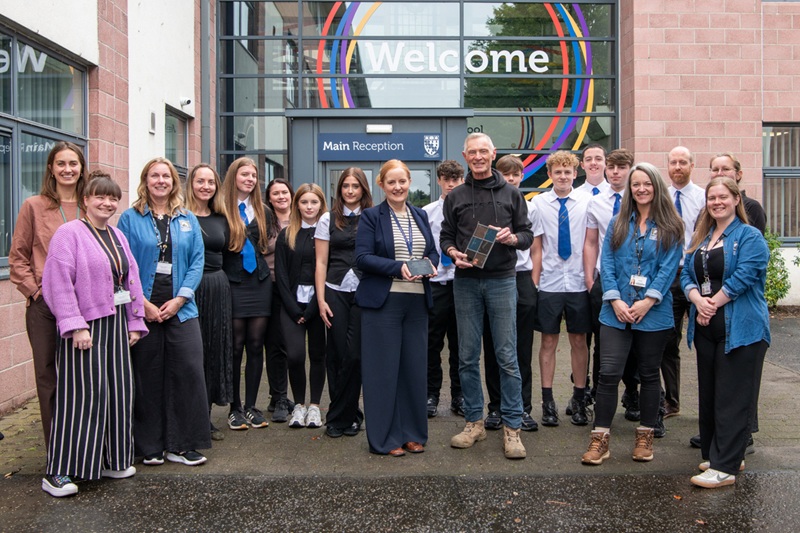
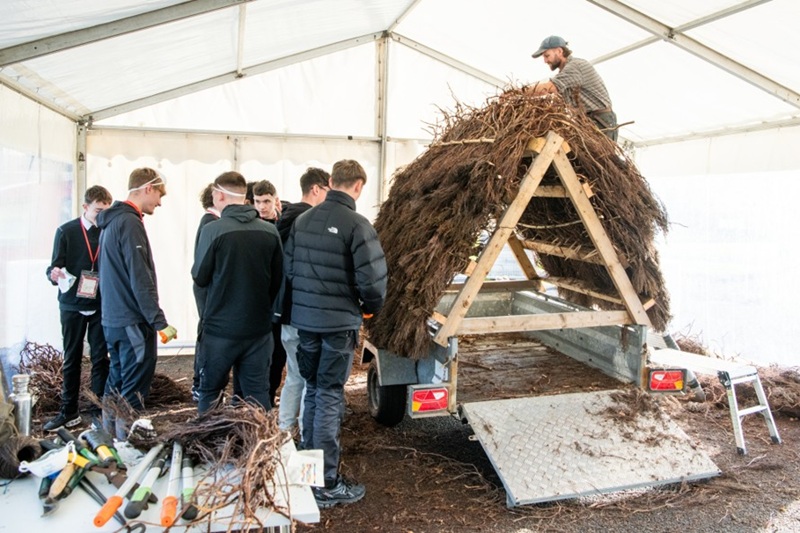
This annual event showcased traditional building materials and skills, and some innovative techniques used within the heritage sector. There were five taster workshops in:
- stonemasonry
- archaeological science
- blacksmithing
- stained glass
- thatching
School pupils got to try each of these craft skills, engage with experts, and develop their knowledge. Each workshop was facilitated by either senior practitioners, current trainees or apprentices.
Pupils, supported by their school Developing the Young Workforce Coordinators, took part in practical stained-glass workshops delivered in collaboration with Gordon Muir, a specialist and former Craft Fellow. The following schools participated in the stained-glass workshop:
- Falkirk High School
- Carrongrange High School
- Alva Academy
- Wallace High School
- Bo’ness Academy
- Lornshill Academy
- Graeme High School
Pupils were introduced to the techniques, tools and creative process involved in stained glass production. The workshops were designed to move beyond observation and allow them to become actively involved in the creative process. Under guidance and supervision from Gordon, the pupils carefully cut and prepared pieces of coloured glass that would later become part of something more significant to mark the occasion.
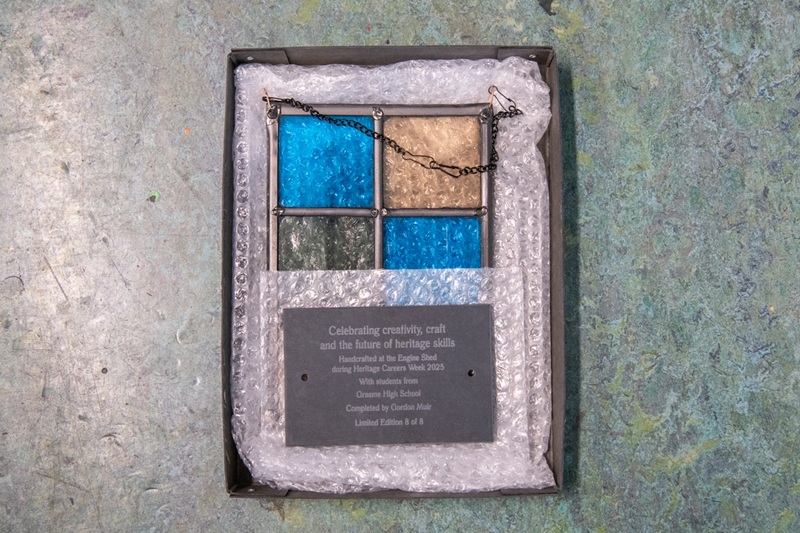
Following the workshops, Gordon used the glass prepared by the pupils to create eight, one-of-a-kind, stained-glass panels. Seven of these panels will be gifted back to each of the participating schools, while the eighth piece has been produced for the Engine Shed, as a lasting record of the collaboration. To complement the gift, a commemorative plaque acknowledges the partnership between the schools, the Engine Shed and Gordon Muir. Although the careers event is annual, the production of the stained-glass panels is a one-off project to recognise the contribution made by the pupils.
Why heritage skills matter
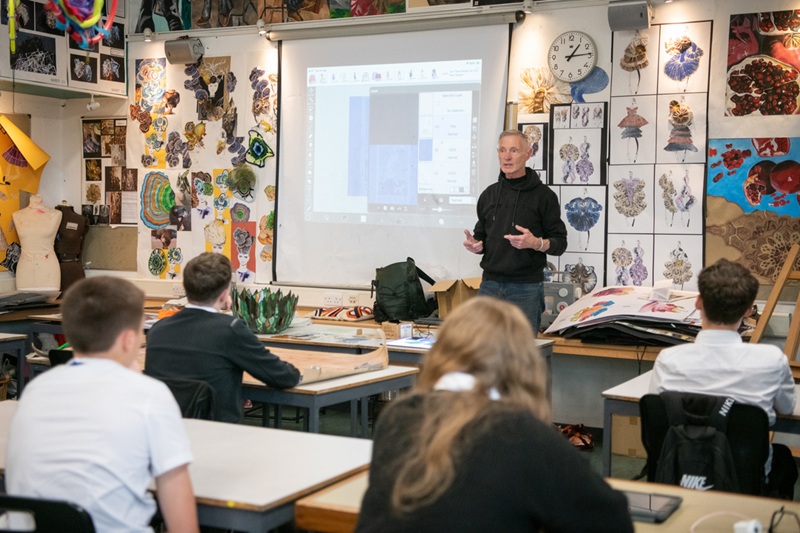
Events and initiatives such as this support the Skills Investment Plan and highlight the continuing importance of heritage skills in today’s world. Crafts such as stained glass making, stonemasonry, traditional roofing, conservation joinery and lime work all play a critical role in protecting and maintaining historic buildings, places and cultural assets.
Many of these skills have been practised for centuries, yet remain highly relevant today. Across the heritage sector there is growing recognition of the need to encourage new generations to engage with crafts, particularly as experienced practitioners retire and demand for conservation skills continues to grow.
Stained glass making itself combines technical skill, artistic creativity, patience and precision. From cutting and shaping glass through to leading, soldering, assembly and restoration, it remains a highly specialised craft that contributes significantly to the preservation and enhancement of historic buildings and spaces.
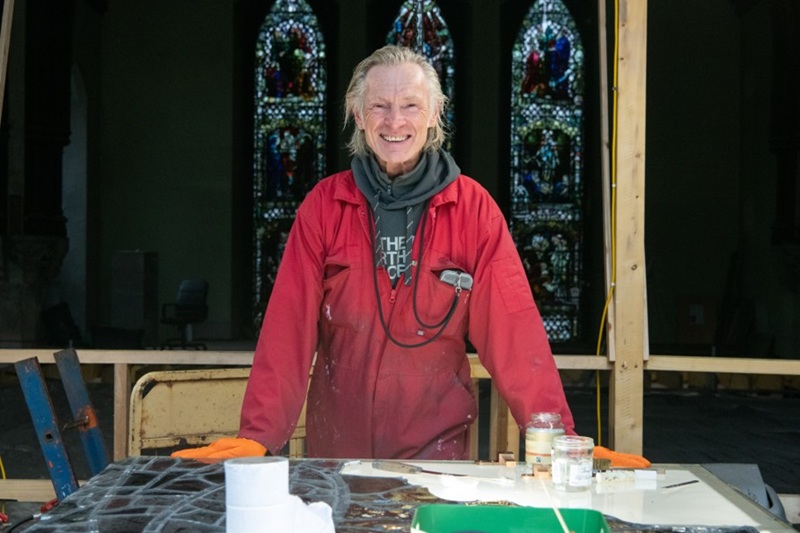
Gordon Muir, former Craft Fellow commented:
“I thought it would be important that participants could have a memento of the day, so we set about cutting glass squares to be leaded into small windows.
There is something very satisfying about using the glass cutter, as it makes a crackling noise against the glass, then the glass is manually snapped like a bar of chocolate. Everyone had a chance to do this before moving on to cutting the surrounding lead to size. This is another satisfying process as the lead yields to pressure, and a little side to side wobble of the knife until it breaks. As the glass and lead were cut, we could start to build the structure of the window on a pre-marked board. All the lead and glass were cut by the students at the event, then soldered and polished later in the studio. It was great to be able to pass on the basics of constructing a leaded light, and hopefully encourage young people to consider our traditional crafts as something they may pursue in the future.”
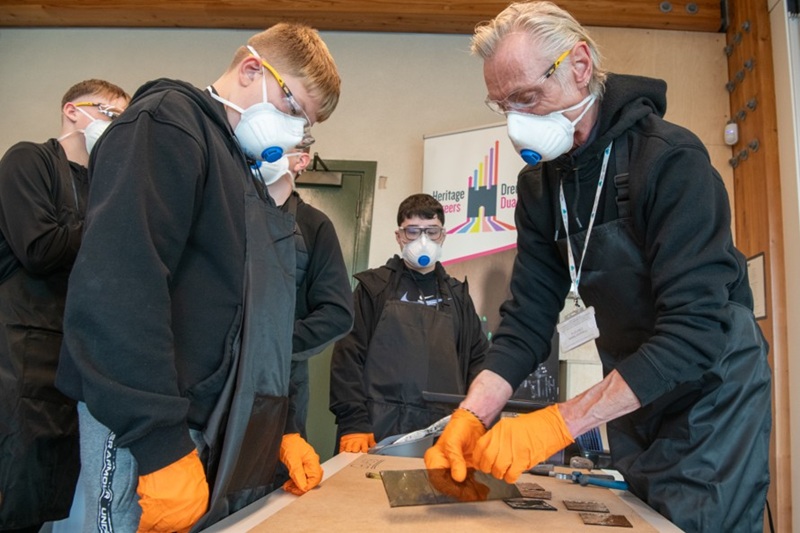
For many of the pupils involved, the workshop may have been their first opportunity to experience a traditional craft environment first-hand. Initiatives like this can help broaden awareness of the diverse and rewarding career pathways that exist within the heritage and conservation sectors.
A lasting reminder
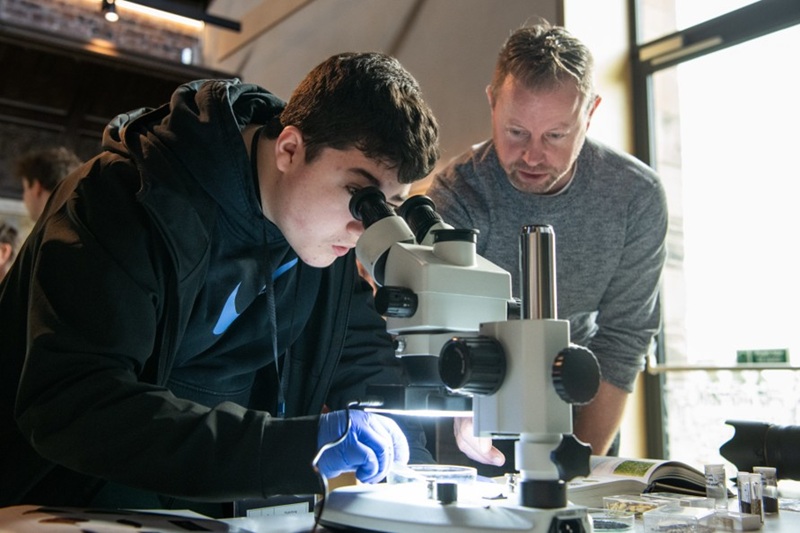
This project serves as a powerful example of how careers engagement activities can create meaningful and lasting outcomes. These panels will remain as a unique moment in the programme’s history, captured permanently in glass. They are a celebration of the creativity of the pupils involved, whilst also reflecting the value of partnership working between schools, craft fellows and HES.
Heritage Careers Week will return in October 2026 with new opportunities and experiences for schools to explore around traditional skills development.
Update your personalised ad preferences to view content
About the author:

Rachael Dorman
Rachael Dorman is the Programme Delivery Manager at the Engine Shed. Rachael enjoys working with experts from across the HES estate, as well as strategic sector partners to ensure messages about traditional buildings, materials and skills are shared for generations to come.
View all posts by Rachael Dorman