

Craft Fellows and Apprentices share their #NoWrongPath stories
Careers | Written by: Guest | Tuesday 4 August 2026
Did you have a squiggly career path? Were there any defining points in your journey? What lessons did you learn along the way?

Benjamin Torrens-Spence studied mathematics and physics, and spent several years working as an outdoor expedition lead in Norway before becoming a Carpentry Craft Fellow. © Benjamin Torrens-Spence
When you are a teenager, it can feel like the weight of the world is on your shoulders as you await exam results. It is hard to see past what you know at that time. But as we all age and grow, often life opens up for us. There really is #NoWrongPath. But you need to keep walking and keep moving forward to forge your own path.
This week (3-7 August 2026) you might see the #NoWrongPath tag popping up across social media, as people take part in the Developing the Young Workforce (DYW) campaign that encourages you to share your career journey by answering three questions:
- What are you doing now?
- When you left school?
- What lessons have you learned?
In this blog, our Heritage Science Modern Apprentice, Jennifer Duncan, and Craft Fellow, Benjamin Torrens-Spence, share some inspiring thoughts about their career journeys so far.
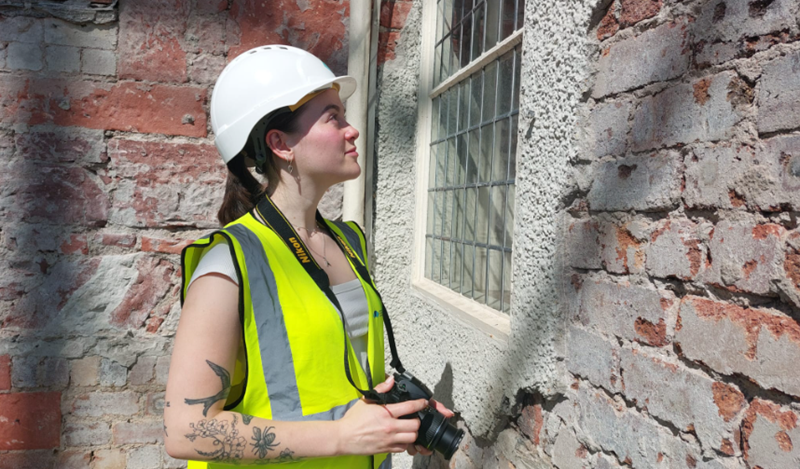
Heritage Science Modern Apprentice, Jennifer Duncan, on site at Hill House in Helensburgh photographing building stones.
Heritage Science Modern Apprentice, Jennifer Duncan
What are you doing now?
I am now ten months into my Modern Apprenticeship with Historic Environment Scotland (HES), and from the very beginning I have felt that I am exactly where I am meant to be.
When you left school?
I left school in March 2020 at the age of 17. It was slightly earlier than expected due to the COVID-19 pandemic. I was not sure what I wanted to do next because I had always enjoyed both art and science. I applied to university and was accepted to study Geography. However, I decided to leave the course after 2 years due to the isolating impact of COVID-19. I then enrolled in a foundation year at art college, but I realised art was not what I wanted to pursue as a career. I believed that having a degree was essential, but my previous experiences of university left me feeling reluctant to go back.
Instead, I secured an entry-level laboratory position and began training as an asbestos analyst. This gave me the opportunity to learn while working, and I was doing something I genuinely enjoyed: science. I realised that I thrived in an environment where I could earn and learn at the same time. Once I completed my training and became qualified, I wanted to continue learning. I began looking for opportunities that would allow me to develop new skills while working in a practical, science-based role. This was the first time I seriously considered apprenticeships.
After eight months of searching and applying for jobs, I came across a Modern Apprenticeship with Historic Environment Scotland as a Laboratory Technician in Heritage Science. Despite feeling discouraged after months of unsuccessful applications, I knew I could not let such a unique opportunity pass without giving it a try.
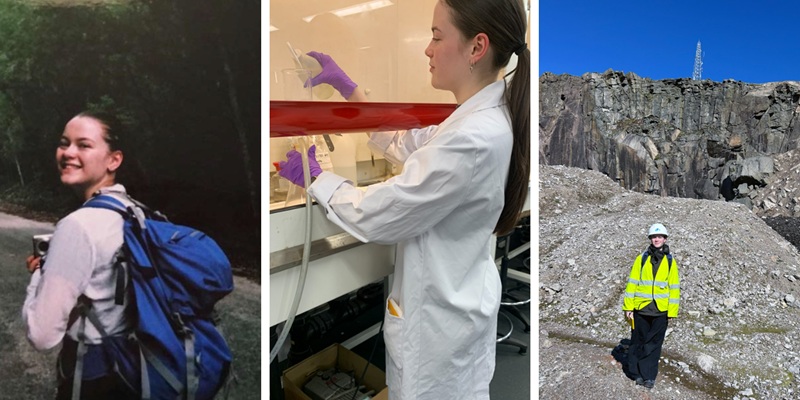
Jennifer Duncan features in three images, left to right: On a science trip at high school, in the lab training as an asbestos analyst, at Sharp Quarry as part of an apprenticeship field trip.
What lessons have you learned?
One of the biggest lessons I have learned is that there is no single “right” path when it comes to building a career. I wish I had known sooner that finding a career that suits you is rarely a linear journey. Every experience along the way, even the ones that feel like detours at the time, can contribute to where you eventually end up. My time at university gave me a foundation in Earth science. My year at art college helped develop my creativity. The two years I spent as an asbestos analyst provided me with laboratory experience and knowledge of mineralogy. All of these experiences, despite seeming unrelated at the time, have contributed to my success in my role as an apprentice today.
Apprenticeships were never presented to me as an option while I was at school. What I have since discovered is that there are many different routes to a fulfilling career, and no one path is better than another. If I could go back and give my younger self one piece of advice, it would be to enjoy each step of the journey a little more instead of constantly worrying about where I would end up. By sharing my story, I hope to encourage others who may be struggling with what to do next. I hope I can help someone else feel a little less lost than I once did.
Benjamin Torrens-Spence, Carpentry Craft Fellow
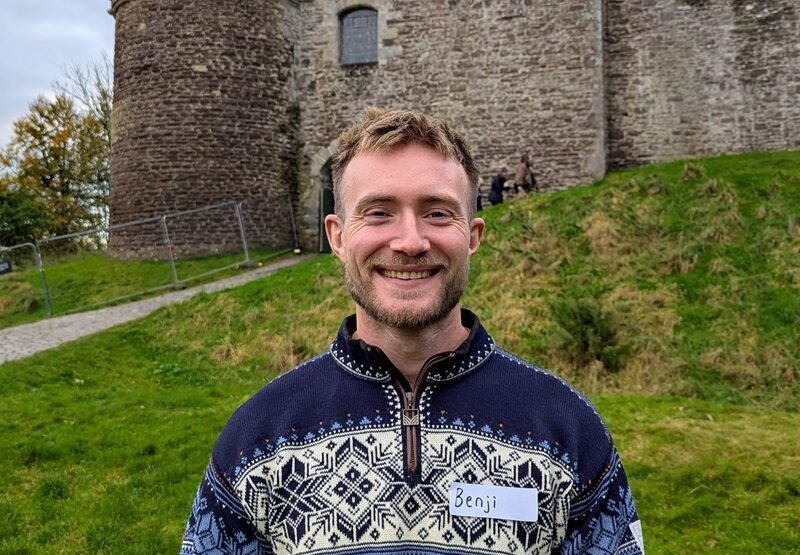
Benjamin at Doune Castle.
What are you doing now?
I am halfway through an 18-month Carpentry Craft Fellowship programme with Historic Environment Scotland.
When you left school?
When I left school in 2010, I was not entirely sure what I wanted to do. So, I studied what I was good at: mathematics and physics. Halfway through the course, I realised this was not what I wanted my career to be. However, I decided to finish my degree and I graduated in 2013. I spent a few years working different jobs, until I went back to college to study a two-year Outdoor Education course. I then completed a one-year traineeship at the Northern Ireland National Outdoor Centre.
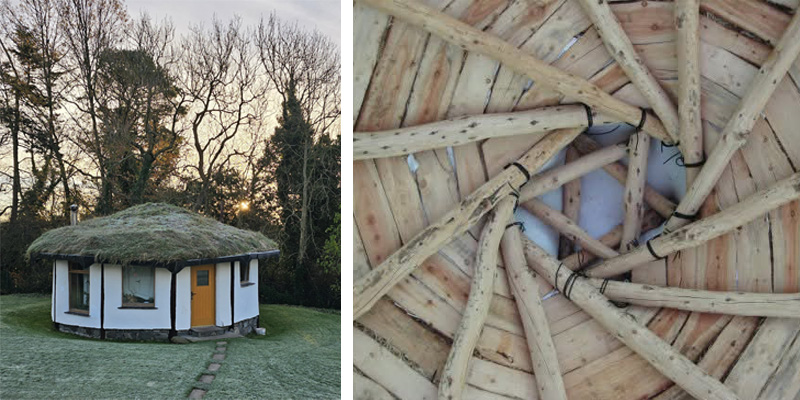
Family-built roundhouse, constructed with natural materials and traditional methods, and view of the roof construction. © Benjamin Torrens-Spence
During COVID-19, I moved into my family’s roundhouse, which I had helped build as a teenager. It was in need of repair, and over these past years I have taken ownership of restoring it. That was where my love for carpentry began.
I continued to work for several years as an outdoor leader in Northern Ireland, and in 2023 I went to Norway to lead kayak and hiking expeditions through the fjords and over Norway’s highest mountains.
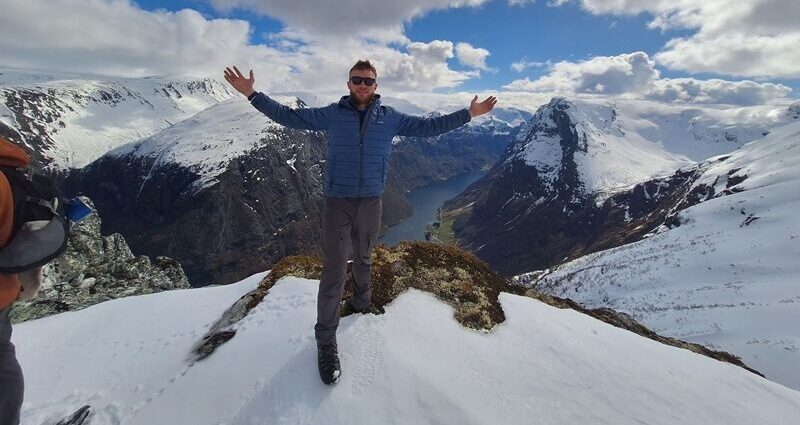
Benjamin Torrens-Spence working as an outdoor expedition lead in Norway. © Benjamin Torrens-Spence
I spent three summer seasons doing this work until 2025, when the desire to develop my carpentry skills had grown even more. It was then that I saw the Craft Fellowship position in carpentry advertised, and I jumped at the opportunity.
What lessons have you learned?
I think there are a few practical lessons I have learned, which I will try to distil.
If you do not know what you want to do, it’s important to know that you have an internal compass that can assist in guiding you. Take a moment to quiet the mind and the anxieties from what people say you should do. Simply listen and feel if there is something pulling you in a certain direction. Take note of what comes out of this short meditation, as these may be clues on your trail. If you prefer a more practical tool, I can suggest doing the ‘Ikigai’, a Japanese concept that means “a reason for being”. The exercise involves filling in a Venn diagram containing what you love, what you are good at, what the world needs, and what you can get paid for. This is a very revealing exercise and can help point you in the right direction.
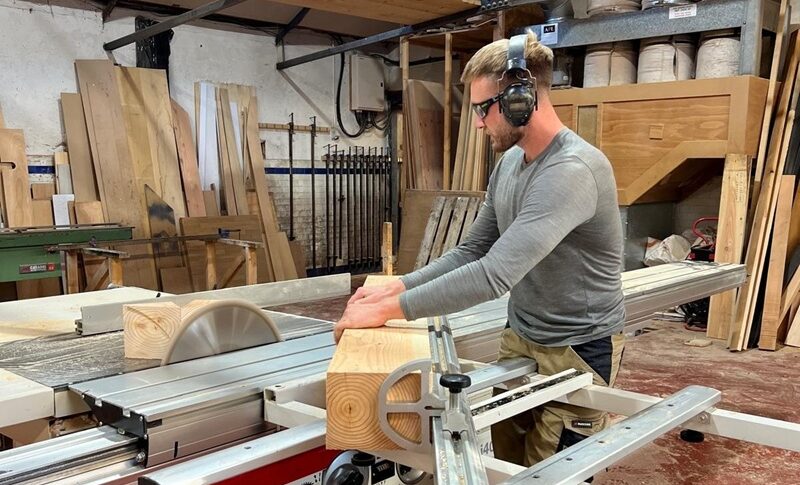
Benjamin in the workshop at his Craft Fellowship hosts, Highland Heritage Woodworks.
After taking that moment to pause, the next important lesson is: go. Do not spend too much time trying to decide what to do or hanging around and waiting for opportunities to come to you. Pick the first thing that resonates with you and get a job or even take a volunteer position in that field. Once you are in, you can immediately begin gathering data about what you do and do not like. From there, you can begin to think about what kind of job would include more of the things you enjoy, and fewer of the things you dislike. This is an iterative process. Each time you move on to the next job, you refine your search and get closer and closer to something fulfilling.
Lastly, what freed me from the expectations I had built up about how a career should look was to think about the actual definition of the word. Aside from its use as a vocation, the word career can also describe a sudden turn or swerve. In an act of etymological liberation, I combined these two definitions and transformed a “career” from a rigid ladder into a dynamic journey. In its new sense, it becomes a reflection of all the twists, turns and pivots that happen throughout your life. Your career becomes the collection of all those experiences and is unique to you.
Each individual journey is unique, but there are a number of ways that we’re supporting people to build practical skills and find pathways into working with Scotland’s historic environment.
Find out how we’re doing our bit to keep traditional building skills alive and accessible, and how you can get involved on the skills and training pages on the Historic Environment Scotland website.
About the author:
Guest
From time to time we have guest posts from partners, visitors and friends of the Engine Shed.
View all posts by Guest