

Improving fire safety in traditional buildings
Maintenance | Written by: Lila Angelaka | Monday 7 July 2025
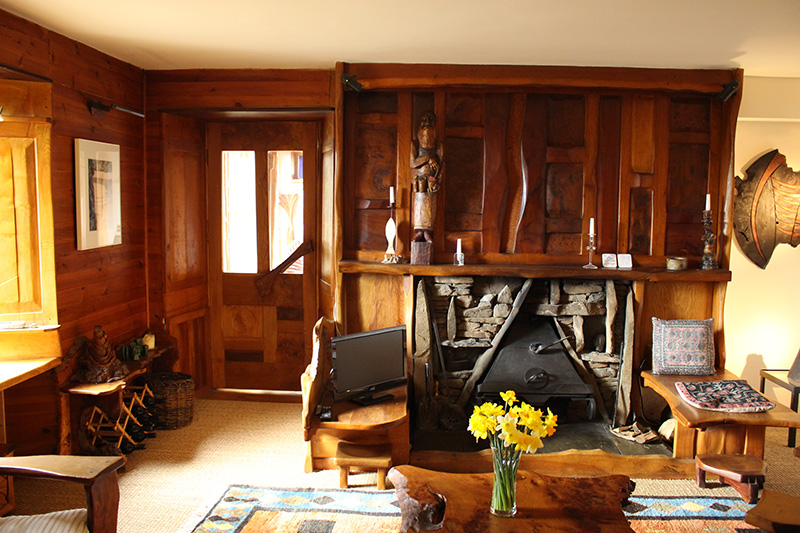
Fireplace in a converted 18th century farmhouse, once home to artist Tim Stead. An enclosed fireplace sits amongst traditional features including timberwork and stone.
Fire is a significant threat to all buildings and can include injury, death, distress and economic losses. Fires affecting traditional or historic buildings carry additional cultural and social impacts that can affect our wellbeing.
This blog shares some advice from our Short Guide, Fire Safety Management in Traditional Buildings for Dutyholders, about fire safety in traditional buildings (generally those built before 1919).
Fire spread in traditional buildings
Traditional buildings are characterised by load-bearing masonry walls, pitched roofs covered in a natural roofing material such as slate, single-glazed timber-framed windows, internal timber, and lime plaster finishes, and passive ventilation systems. Ventilation and breathability are key in a traditional construction, with these buildings having hidden and often interconnected voids, such as behind the lath and plaster and chimney flues. This, combined with an abundance of timber (used in roof structures, window frames, flooring etc), and a history of uncontrolled building alterations, can make them more vulnerable to fire spread.
How quickly a fire spreads can depend on the fire load in a room. This is heat which can be released by all the combustible materials in a fire, and can include clutter, clothing, furniture etc. Unless it is controlled, it will escalate. A fire in a room can reach a temperature of 1000°C in just over three minutes. Even non-combustible structural elements can become heated and eventually distressed. Stonework, for example, can experience micro-cracking, loss of surface material and mineralogical changes, which makes it weaker and affects its stability.
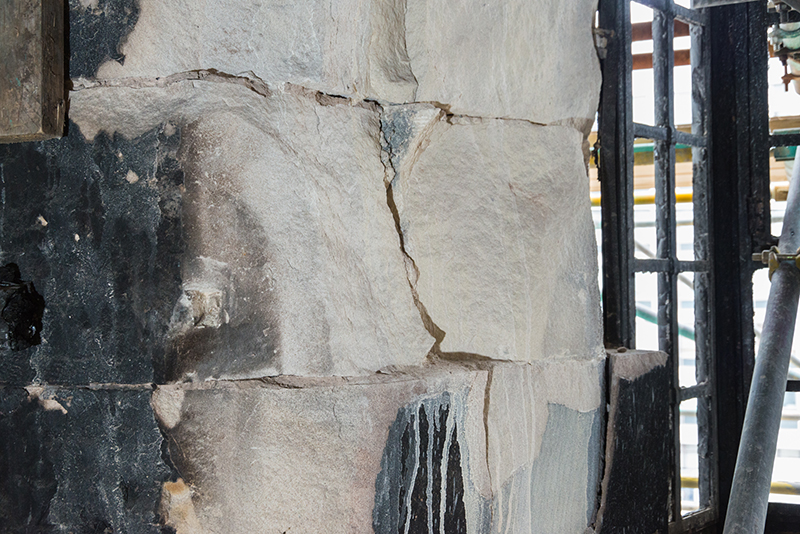
A close up view of damage caused to the stonework in the library at Glasgow School of Art after the 2014 fire.
Legislative requirements
Whether you are a dutyholder of a traditional building or are involved in the design of fire safety improvement works you will have legislative obligations under the Fire (Scotland) Act 2005 and will have to comply with the Fire Safety (Scotland) Regulations 2006.
All historic buildings should have a fire safety policy, as part of a fire safety management plan, which sets out how the owner or occupier intends to manage fire safety effectively. Another crucial part of this plan is the fire risk assessment. It is used to assess risk and identify where improvements can/should be made, that may result in buildings works. Any building works of course should comply with the Building (Scotland) Regulations 2004, also known as the Building Standards.
Striking a balance between requirements and protecting the historic environment can be challenging, especially as the Building Standards are primarily designed for new builds and their rigid application to traditional buildings can cause significant loss of historic fabric.
However, there may be many possible ways of achieving an adequate standard of fire safety through alternative solutions or innovative interventions that protect the significance and fabric of such buildings.
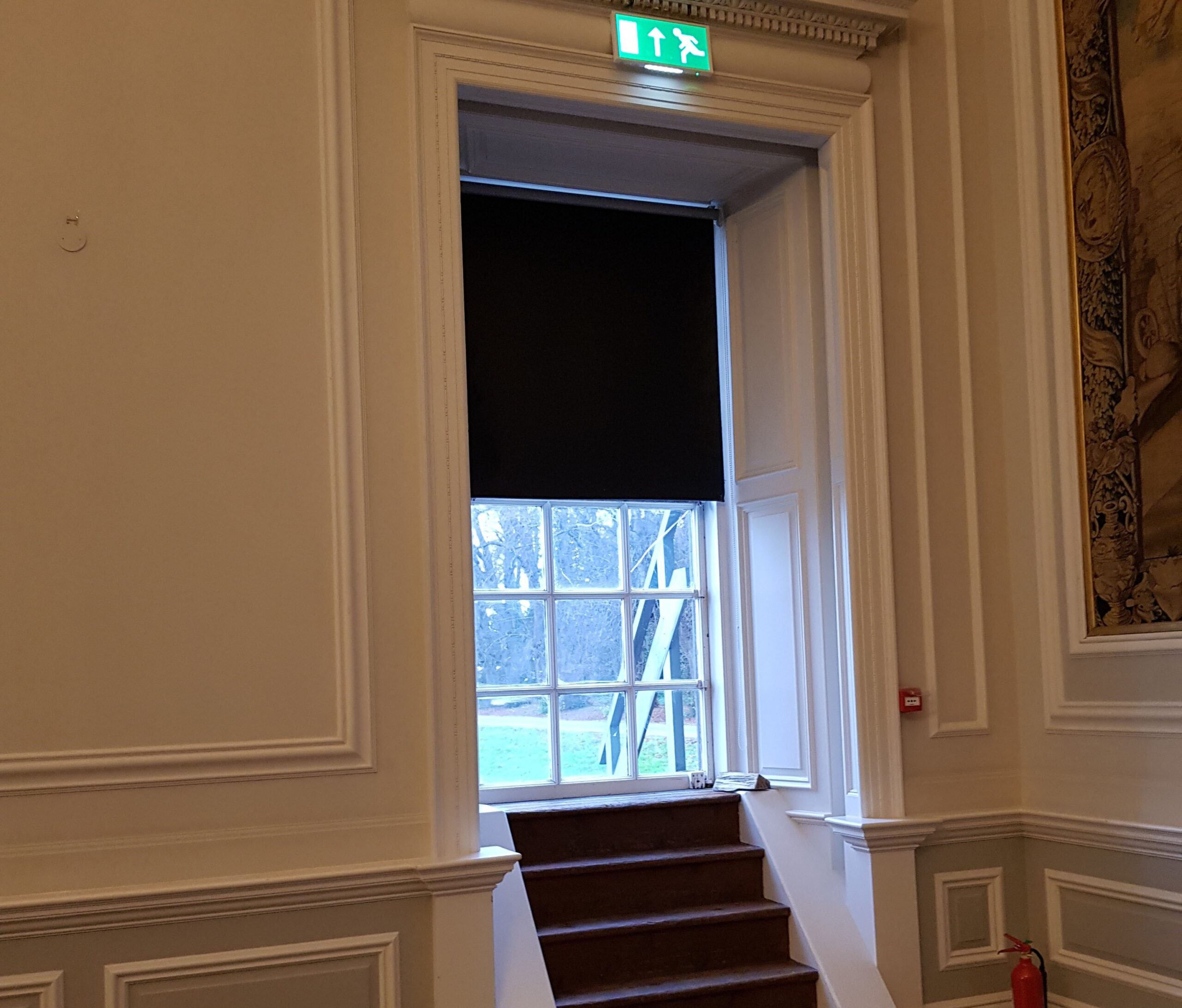
A category A-listed building where works were required to sympathetically convert a window into an additional fire escape route.
Fire prevention
Fire needs oxygen, fuel and heat to start (the fire triangle). Fire prevention is when you reduce the risk of a fire starting, generally through:
- minimising heat sources (overloaded sockets, faulty wiring, portable heaters etc.)
- minimising fuel sources (textiles, paperwork, linings etc.)
This can include regular inspections on electrical systems and appliances, minimising waste and keeping flammable materials away from heat sources, and managing open fires and high-risk activities such as cooking.
Hot works (involving flames or produce heat or sparks) are also a high-risk activity. Fires can happen during building maintenance or building work, often caused by: the negligent application of heat; fire-resisting partitions temporarily breached by construction work; or because smoke detectors have been temporarily disarmed or not yet commissioned. If there is a build-up of construction waste which serves as fuel, it can accelerate the growth of a very destructive fire.
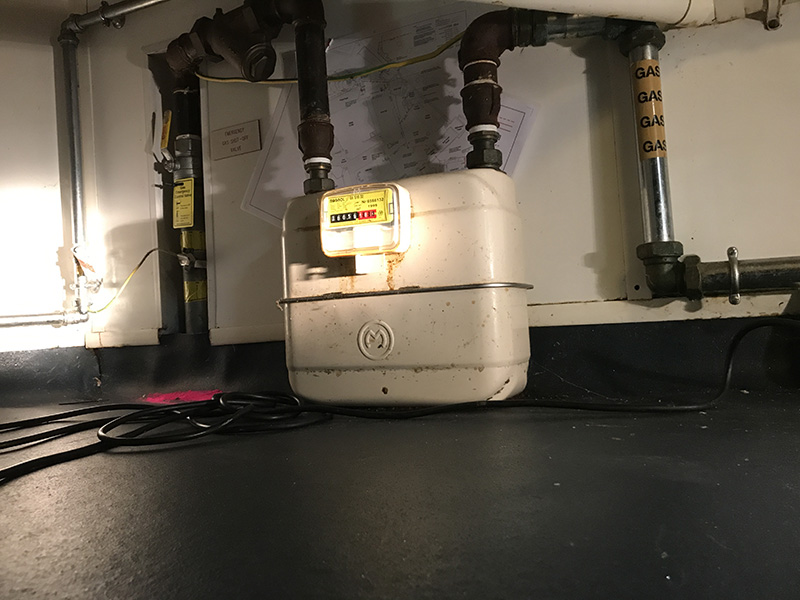
Gas meter in the Great Hall kitchen at Stirling Castle with a compression fitting (the elbow below and above the ‘Gas’ marker tape on the chrome pipe at the right of the meter). Such fittings can be mandated at tender stage to eliminate hot works on site.
Fire protection
If a fire does occur, measures are put in place to protect people and property by limiting the spread of fire, allowing people to escape. Ensuring a safe means of escape for all users of a building is paramount and this may require changes or improvements to the building fabric. Such measures are commonly divided into active and passive protection measures.
Active fire protection measures
Active measures rely on an action setting them in motion, such as smoke and heat detectors and alarms, sprinklers, fire extinguishers and escape lighting. They are various types to suit different buildings and situations/uses and to allow a reduced impact to the fabric or appearance of a building.
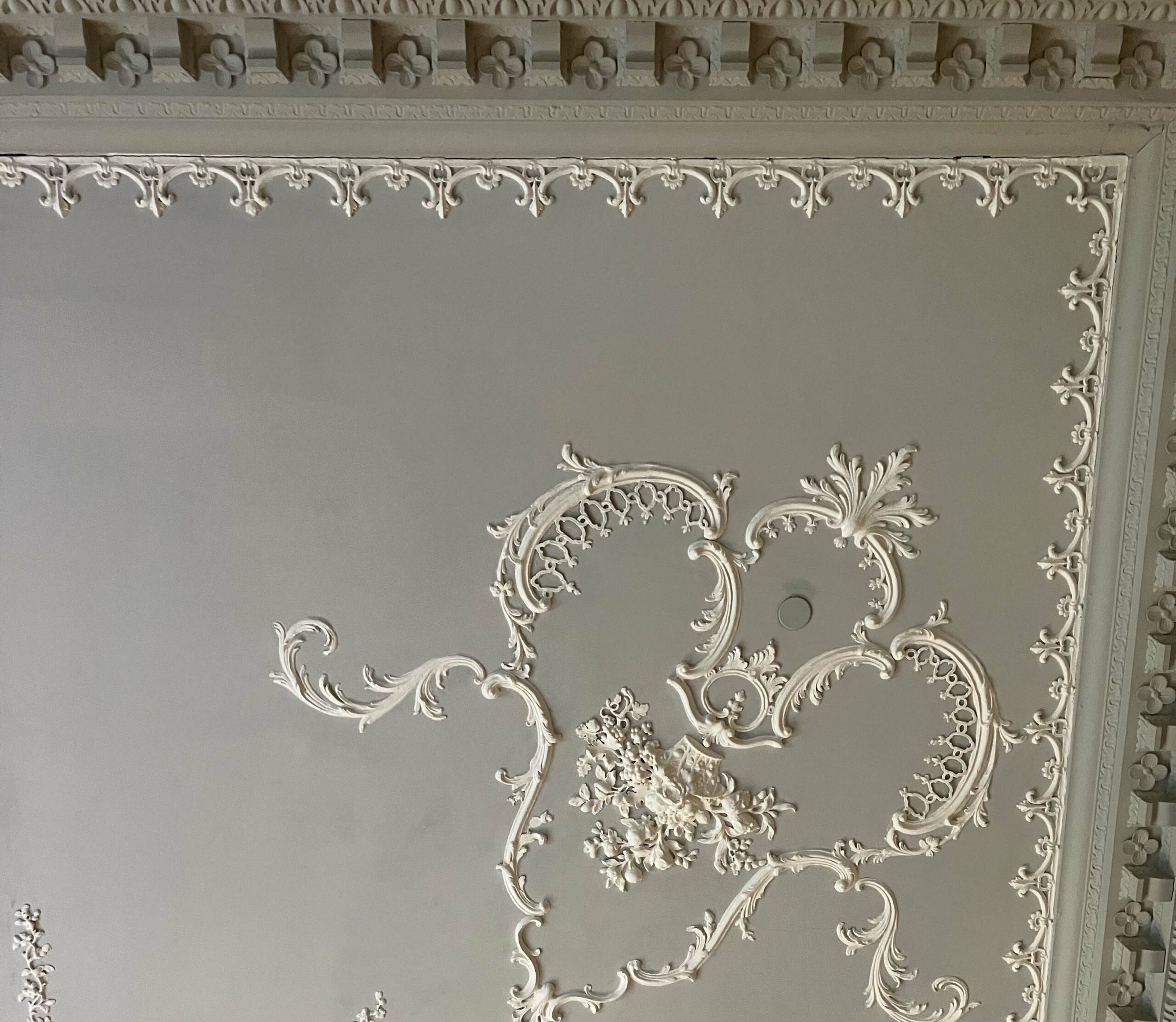
Concealed sprinkler heads in the decorated ceilings at Duff House have coloured caps to blend with interior finishes in the rooms.
Passive fire safety improvements
Passive fire protection relates to the physical precautions within a building’s fabric (such as walls, partitions and ceilings) that inhibit the spread of fire and smoke. In a historic building, however, there may be features, such as historic doors, that are of cultural significance. In such cases, upgrading these existing elements to improve their fire-resistance may be better rather than replacing them.
There are various ways and measures to improve fire-resistance of the building fabric. Before they can be implemented, however, it is important to ensure that the building is in good repair and each element being upgraded is structurally sound. For example, before upgrading the fire resistance of a traditional lath and plaster ceiling, the condition of the plaster should be good with substantial keying.
Your choice of measures will depend on the building’s form/structure and its significance, and should be proportionate to the risk. Measures can include:
- upgrading doors to increase their fire-resistance and inhibit the spread of smoke
- compartmentation and subdivision of attics
- enhancing the fire-resistance of escape route
- upgrading the fire resistance of building elements
- addressing voids and holes
- enhancing the fire resistance of floors and other structural timber elements
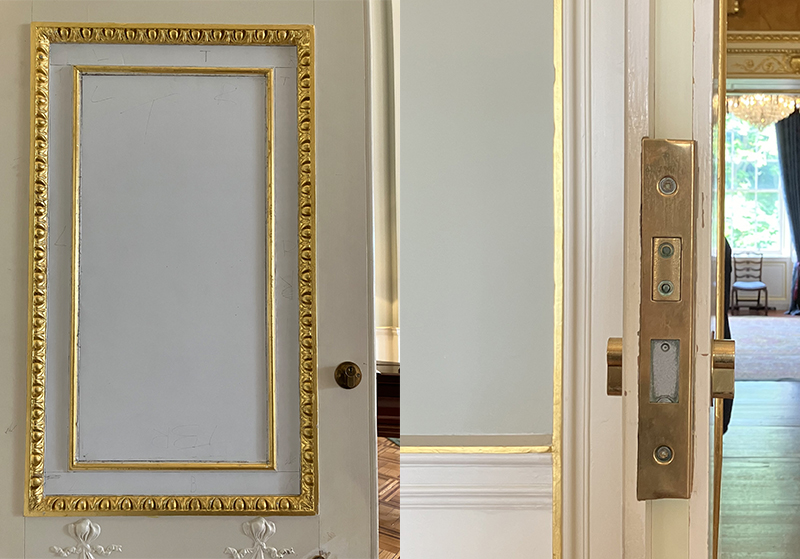
A category A-listed Duff House in Banff, there was a need to improve the fire resistance of doors. This was achieved by the insertion of intumescent paper on the panels of the doors and intumescent strips around the door edges.
Traditional buildings with separating timber floors may have cavities between the floor and the wall. This can provide a route for the fire to travel up to the floor above and spread further. Filling such cavities to stop fire from spreading may be required or additional layers of fire protection may be provided to prevent fire from breaking into such cavities. However, closing these cavities may reduce air movement and increase the risk of decay. Careful consideration will be needed to minimise such risks. This may require the specialised expertise of a fire engineer experienced in traditional buildings.
Similarly, creating separations or divisions within an area or a property can prevent fire spread and contain smoke and toxic gases. Where compartmentation is inadequate and upgrades would be overly damaging to the historic building fabric, alternative solutions may be acceptable, for example improved evacuation procedures combined with enhanced fire detection.
Planning for a fire emergency
All these interventions will be most effective with an appropriate fire safety management plan, which must include an emergency fire action plan. The plan will set out the appropriate actions that occupants should take in the event of a fire and should be specific to the premises. For historic buildings, it can include information about particularly sensitive or important parts of the building. This can inform an emergency response and help to identify priorities for firefighting.
Your responsibilities
Dutyholders are responsible for complying with legislation and having measures put in place that protect the people who use the building. Traditional buildings require extra thought and consideration to also protect the building itself and its social and cultural significance.
You can find out more about managing fire safety in buildings in our publication: Short Guide 14: Fire Safety Management in Traditional Buildings for Dutyholders.
About the author:

Lila Angelaka
Lila is a Senior Technical Officer in the Technical Research Team. Her background is in architecture and conservation, and she previously worked as a Casework Officer. In her current role, she provides technical advice, both internally and externally, and is responsible for the writing and editing of a number of technical publications, such as the Technical Papers and Refurbishment Case Studies.
View all posts by Lila Angelaka